HII Region Filling Factors in NGC 628: Luminosity-Size Relation and Connection with PAH Emission
Aug 3, 2026·,,,,,,,, ·
0 min read
Lorena Aragüete Riesco
José Manuel Vílchez
Salvador Duarte Puertas
Laurie Rousseau-Nepton
Carmelle Robert
René Pierre Martin
Philippe Amram
Robert Kennicutt, Jr.
Christophe Morisset
Ray Garner
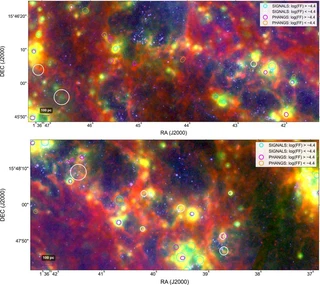 Figure 17 of Aragüete Riesco et al. (2026)
Abstract
Aims. Understanding the internal structure of H II regions is fundamental to constraining star-formation processes in galaxies. We investigate how the filling factor (FF) relates to luminosity, size, electron density, and Hα equivalent width in H II regions. We also explore the association between star-forming regions and PAH-to-dust emission, to assess their possible connection to the evolutionary stages of H II regions.
Methods. We investigate the FF in 622 H II regions in NGC 628, combining 475 from SIGNALS and 147 from PHANGS-MUSE, using a dedicated analysis pipeline. We derived luminosity, emission-line fulxes, radii, electron densities, and FF. We used PHANGS-JWST survey images to study the spatial relationship between the FF and PAH-to-dust emission, quantified by the PAH-to-dust ratio RPAH using JWST/MIRI emission bands at 7.7, 11.3, and 21 μm.
Results. Higher Log(FF) and high EW(Hα) values are found in luminous regions, whereas more extended regions with lower EW(Hα) display lower Log(FF) values. We show that the H II radius definition significantly affects the LHα–R relation. Low-luminosity, compact H II regions appear to reflect a transition from cluster-powered regions to nebulae ionized by single massive stars with the transition occurring around log(LHα) ∼ 37 erg s-1. The PAH-to-dust ratio RPAH correlates with the volumetric Hα luminosity density, LHα/R3, with a transitional range centered around log(LHα/R3) ∼ 32 erg s-1, corresponding to log(FF) ≈ -4.4. Regions with lower Log(FF) values exhibit higher RPAH values, suggesting less efficient PAH processing in more porous structures.
Conclusions. These results could be consistent with an evolutionary scenario in which the FF decreases with stellar cluster age in giant H II regions as they evolve toward fainter and more spatially extended states. The volumetric Hα luminosity density, LHα/R3, provides a useful representation that reduces the covariance between LHα and R induced by different region definition methods, enabling more consistent cross-catalog comparisons across segmentation approaches.
Type
Publication
Astronomy & Astrophysics
Status
Peer-reviewed
Open access
License
CC-BY-4.0

Authors
Ray Garner
(he/him)
TAMU Astronomy Postdoctoral Researcher
I’m a scientist, Star Wars fan, and amateur photographer raised in Georgia. My research interests include galaxy evolution, star formation, and nebular diagnostics.